
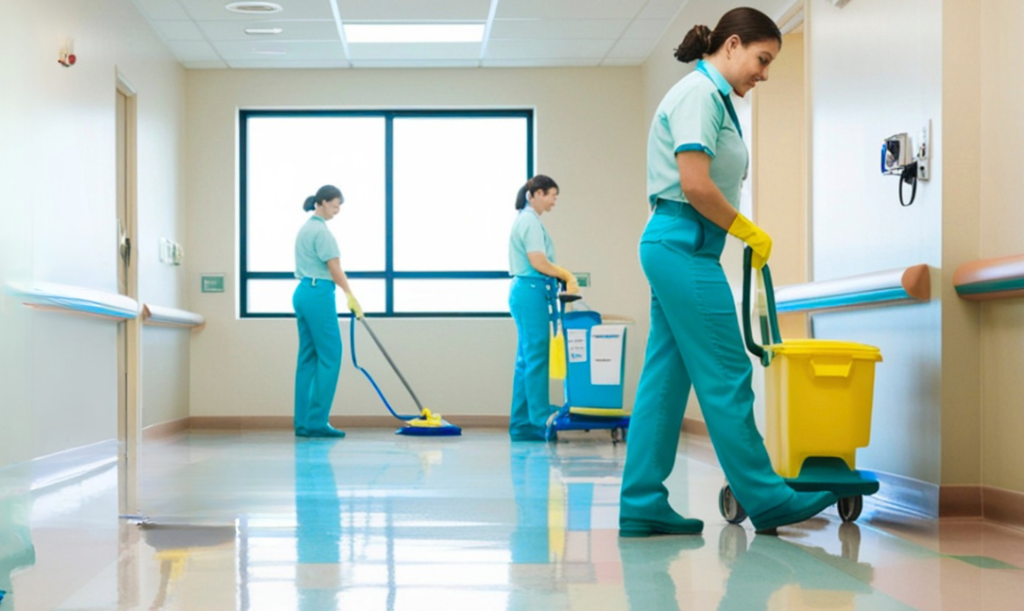
Hospitals and clinics need a higher level of cleanliness than ordinary commercial spaces. Every day, these healthcare facilities receive patients, visitors, doctors, nurses and other healthcare professionals. Maintaining a clean environment is essential for patient comfort, staff safety and infection prevention.
In Kerala, hospitals, dental clinics, diagnostic centres and other healthcare facilities must follow proper cleaning and hygiene practices. Professional cleaning involves more than sweeping floors and wiping surfaces. It requires trained staff, suitable cleaning products, proper disinfection methods and organised cleaning schedules.
At Promise Cleaning Service, we understand the importance of maintaining hygienic spaces. Professional cleaning practices help healthcare facilities maintain a clean, comfortable and welcoming environment for everyone.
Why Is Professional Hospital Cleaning Important?
Healthcare environments contain different types of bacteria, viruses and other microorganisms. Frequently touched surfaces, patient beds, washrooms and waiting areas can become contaminated throughout the day.
Regular cleaning and appropriate disinfection help reduce the spread of harmful microorganisms. They also create a better experience for patients and visitors.
Some important benefits of professional hospital cleaning include:
- Helps reduce the risk of infection transmission.
- Maintains hygienic patient care environments.
- Keeps waiting rooms and consultation areas clean.
- Improves washroom hygiene and odour control.
- Protects healthcare workers, patients and visitors.
- Creates a positive impression of the healthcare facility.
1. Following a Proper Cleaning Schedule
Professional cleaners follow organised cleaning schedules instead of cleaning randomly. Different areas of a hospital require different cleaning frequencies depending on their usage and contamination risks.
A typical cleaning schedule includes:
Daily cleaning: Floors, waiting areas, reception desks, washrooms and frequently touched surfaces.
Regular cleaning: Doors, windows, furniture, walls and other commonly used areas.
Scheduled deep cleaning: Corners, less frequently touched surfaces, high-level areas and other spaces that require additional attention.
Terminal cleaning: Thorough cleaning and disinfection of patient-care areas after patient discharge or transfer, according to the facility’s infection prevention procedures.
A documented cleaning schedule helps ensure that important areas are not overlooked.
2. Proper Cleaning and Disinfection of High-Touch Surfaces
High-touch surfaces are among the most important areas to consider in healthcare cleaning.
Patients, doctors, nurses and visitors regularly touch these surfaces, increasing the possibility of contamination.
Professional cleaners pay particular attention to:
- Door handles and entrance switches.
- Reception counters and desks.
- Patient bed rails.
- Chairs and waiting room furniture.
- Light switches.
- Handrails and frequently touched equipment surfaces.
- Washroom taps and door handles.
Cleaning removes dirt and organic matter, while disinfection helps reduce microorganisms on suitable surfaces. Both processes must be performed using appropriate products and methods.
3. Using the Right Cleaning Products and Disinfectants
Not every cleaning chemical is suitable for healthcare environments. Professional cleaning teams must select products according to the surface, cleaning requirement and healthcare facility’s infection control procedures.
Common cleaning supplies include:
- Neutral cleaning detergents for suitable surfaces.
- Approved surface disinfectants.
- Bathroom cleaning products.
- Glass cleaning solutions.
- Floor cleaning products.
- Appropriate cleaning cloths and mops.
Disinfectants must be used according to the manufacturer’s instructions, including the recommended dilution and contact time.
Mixing different cleaning chemicals without proper guidance should always be avoided because it can create dangerous reactions.
4. Maintaining Hospital Washroom Hygiene
Hospital washrooms require frequent attention because they are used by patients, healthcare professionals and visitors throughout the day.
Professional cleaners follow a regular washroom cleaning routine that includes:
- Cleaning and disinfecting toilets and urinals.
- Washing washbasins and taps.
- Cleaning mirrors and other fixtures.
- Disinfecting frequently touched surfaces.
- Cleaning floors and removing visible dirt.
- Checking soap and handwash availability.
- Emptying general waste bins according to facility procedures.
- Controlling unpleasant odours.
Maintaining clean and well-stocked washrooms improves hygiene and makes healthcare facilities more comfortable for visitors.
5. Following Proper Biomedical Waste Handling Procedures
Biomedical waste management is one of the most important responsibilities in healthcare facilities.
Waste generated during medical procedures, laboratory activities and patient care may contain infectious materials or hazardous items. Therefore, it must never be handled like ordinary household waste.
Professional cleaners working in healthcare environments must understand the facility’s waste management procedures.
Important practices include:
- Separating general waste from biomedical waste.
- Following the prescribed colour-coded waste segregation system.
- Using designated containers for different waste categories.
- Avoiding direct contact with contaminated materials.
- Following safe collection and transportation procedures.
- Reporting spills, damaged waste containers and accidental exposure immediately.
Biomedical waste must be handled by trained and authorised personnel according to applicable regulations. General cleaning staff should not independently handle medical waste or sharps unless they are specifically trained and authorised to do so.
6. Using Personal Protective Equipment (PPE)
Personal protective equipment helps protect cleaning staff from exposure to cleaning chemicals, contaminated surfaces and potentially infectious materials.
Depending on the cleaning task and risk assessment, professional cleaners may require:
- Disposable or reusable protective gloves.
- Masks or respiratory protection where required.
- Protective aprons or gowns.
- Closed and appropriate footwear.
- Eye protection when there is a splash risk.
PPE must be used correctly and replaced or cleaned according to established procedures.
Healthcare cleaning staff should also receive appropriate training on hand hygiene, infection prevention, chemical safety and accidental exposure procedures.
7. Preventing Cross-Contamination During Cleaning
Cross-contamination occurs when microorganisms are transferred from one surface or area to another.
For example, using the same cleaning cloth for a washroom and a patient consultation room can spread contamination.
Professional cleaning teams follow practices such as:
- Using separate cleaning materials for different areas.
- Following designated colour-coding systems where implemented.
- Cleaning from cleaner areas towards dirtier areas.
- Replacing contaminated cloths and mop heads.
- Maintaining clean and organised cleaning equipment.
- Performing hand hygiene at appropriate times.
These procedures help prevent the transfer of contaminants between different areas of a healthcare facility.
8. Special Attention to Waiting Rooms and Reception Areas
Waiting rooms and reception areas are among the busiest parts of hospitals and clinics. Many people use these spaces throughout the day, making regular cleaning important.
Professional cleaners focus on:
- Cleaning reception counters.
- Disinfecting chairs and frequently touched surfaces.
- Keeping floors free from dust and visible dirt.
- Cleaning entrance doors and glass panels.
- Emptying general waste bins.
- Maintaining clean and organised surroundings.
A hygienic reception area creates a welcoming first impression and improves the overall experience for patients and visitors.
9. Maintaining Floors, Walls and Common Areas
Hospital floors and common areas experience continuous movement throughout the day. Dust, dirt and liquid spills can make these spaces unhygienic and potentially unsafe.
Professional cleaners use appropriate floor-cleaning methods based on the flooring material and the area’s requirements.
Important practices include:
- Regular sweeping and damp mopping.
- Removing visible stains and spills promptly.
- Using suitable floor-cleaning products.
- Keeping corridors free from cleaning equipment and obstacles.
- Placing warning signs when floors are wet.
- Cleaning walls, corners and other surfaces when required.
Cleaning procedures should avoid creating dust or spreading contamination into patient-care areas.
10. Staff Training and Cleaning Quality Checks
Professional hospital cleaning is not only about having cleaning equipment. Staff members must understand the correct procedures and safety requirements.
Healthcare facilities should ensure that cleaning personnel receive training in:
- Infection prevention and control.
- Correct cleaning and disinfection methods.
- Safe chemical handling.
- Biomedical waste segregation procedures.
- Personal protective equipment usage.
- Hand hygiene.
- Emergency spill response.
- Safe handling of cleaning equipment.
Supervisors should also conduct regular inspections and maintain cleaning records to identify areas that require additional attention.
Why Should Hospitals and Clinics Choose Professional Cleaning Services?
Managing healthcare cleanliness requires consistent attention, suitable equipment and trained personnel. Professional cleaning services can help healthcare facilities organise their housekeeping activities and maintain hygienic surroundings.
Choosing a professional cleaning provider can offer several advantages:
- Planned cleaning routines.
- Consistent cleaning quality.
- Suitable cleaning equipment and products.
- Trained cleaning personnel.
- Better maintenance of common areas.
- Reduced pressure on internal housekeeping teams.
However, general commercial cleaning services should not be confused with specialised hospital infection-control services. Operating theatres, isolation rooms, laboratories and other high-risk areas require facility-approved protocols and appropriately trained personnel.
Hospital & Clinic Cleaning Services in Kerala
Maintaining hospital and clinic cleanliness requires proper planning, trained cleaning staff and consistent hygiene practices. From disinfecting frequently touched surfaces to maintaining washrooms and following biomedical waste procedures, every activity contributes to a safer healthcare environment.
Healthcare facilities in Kerala should give importance to professional cleaning standards to maintain hygienic surroundings for patients, visitors and staff.
Promise Cleaning Service is committed to providing dependable cleaning solutions for different spaces. Whether it is regular housekeeping or detailed cleaning requirements, choosing the right cleaning approach helps create cleaner and more comfortable environments.
If you are looking for reliable cleaning services in Calicut or other areas of Kerala, contact Promise Cleaning Service to discuss your cleaning requirements.
Frequently Asked Questions (FAQs)
1. How often should hospitals be cleaned?
Hospitals require daily cleaning, frequent disinfection of high-touch surfaces and additional cleaning whenever contamination or spills occur. The frequency depends on the area, patient activity and infection risk.
2. What cleaning products are used in hospitals?
Hospitals use suitable detergents, approved surface disinfectants and specialised cleaning products depending on the surface and cleaning requirement. Products must be used according to their instructions and facility protocols.
3. Why is disinfection important in clinics?
Disinfection helps reduce harmful microorganisms on suitable surfaces and supports infection prevention. It is particularly important for frequently touched areas such as examination tables, door handles and reception counters.
4. What is the difference between hospital cleaning and regular office cleaning?
Hospital cleaning requires additional attention to infection prevention, surface disinfection, biomedical waste segregation and protective equipment. Regular office cleaning generally focuses on dust removal, floor maintenance and everyday hygiene.
5. Do hospital cleaning staff need special training?
Yes. Staff working in healthcare environments need appropriate training in cleaning procedures, infection prevention, chemical safety, PPE usage and biomedical waste handling relevant to their responsibilities.
6. Can professional cleaners help maintain clinic hygiene?
Yes. Professional cleaning teams can help maintain floors, waiting rooms, reception areas, washrooms and other suitable spaces through planned cleaning routines. Specialised clinical areas require additional training and facility-approved procedures.